

How Do We Fix It?
Improving access to clean water for Native communities is at the nexus of the main priorities of the Biden/Harris Administration. Through the Bipartisan Infrastructure Law and the Inflation Reduction Act, the Administration is directing billions of dollars to funding programs designed to improve Tribal water infrastructure and water reliability. These programs aim to address pervasive and historic inequities. They are also a smart economic investment – every dollar spent on sanitation facilities in tribal areas in the U.S. has a twenty-fold return in health benefits. Now is the time to join together to solve this longstanding public health inequity.
Executive Branch Commitment
The Executive Branch must publicly commit to providing universal access to clean water as a component of fulfilling its federal trust responsibility to Indian tribes. See Universal Access report on Executive Branch recommended actions here.
Whole of Government Approach
A whole of government approach is essential to break down historical barriers and ensure that Indian country has this basic service that is taken for granted by most U.S. residents. See Universal Access report on the Whole of Government Approach here.
Establish Targets & Deadlines
Establish accelerated targets and deadlines for providing Native households with access to clean and safe water.
On-the-ground Solutions
Design on-the-ground solutions in consultation with Tribes to streamline access to federal funding, address barriers to effectively funding projects, and provide resources to support long-term operation and maintenance costs. Our new handbook provides a navigational aid to federal funding for Tribes. See Universal Access Handbook Summary here.Read the full Handbook here.
Funding Provided by the Bipartisan Infrastructure Law
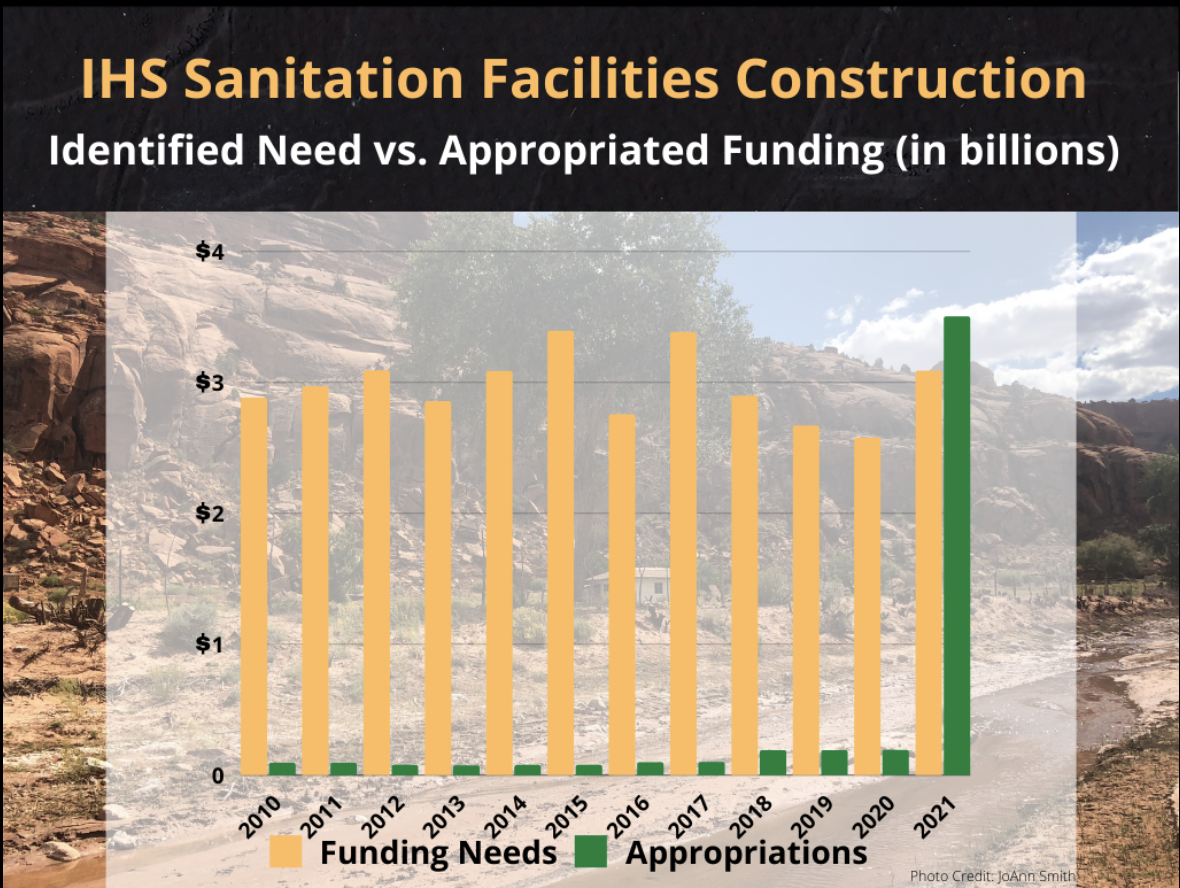
Indian Health Service
Sanitation Facilities Construction Program: $3.5 billion
Bureau of Reclamation
Indian Water Rights Settlements (that can include infrastructure funding): $90 million
Rural Water Supply Projects: $1 billion
Environmental Protection Agency
Clean Water State Revolving Fund – Tribal Set-Asides: $239 million
Drinking Water State Revolving Fund – Tribal Set-Asides: $239 million
Indian Reservation Drinking Water Program: $250 million
Operation Sustainability of Small Public Water Systems Grant Program (may include, but does not exclusively serve, Tribal systems): $50 million/year
Additional funds for technical assistance to Tribal publicly owned wastewater systems
Funding Provided by the Inflation Reduction Act
Bureau of Reclamation
Plan, design, construct water supply projects for disadvantaged communities: $550 million
Remaining Funding Needed
Indian Health Service
Essential Community Facilities: $228 million
Technical Assistance and Training: $150 million
Operations and Maintenance Assistance: $500 million
Bureau of Reclamation
Technical Assistance and Training: $90 million
Department of Agriculture
Rural Development — Grants for Water Systems: $500 million
Technical Assistance : $150 million
Federal Trust Responsibility
One of the most important principles in federal Indian law is the federal Indian trust responsibility to Tribal nations.Under it, the federal government is required to ensure the survival and welfare of Indian tribes and people. Failing to provide basic water service cannot be reconciled with this legal fiduciary obligation. The Senate Indian Affairs Committee held a hearing on September 27, 2023 on the government’s trust obligations to ensure water access for tribes. UACW’s Initiative Lead, Heather Tanana provided powerful testimony highlighting the federal trust responsibility to provide a permanent homeland where tribal communities could live, prosper, and thrive forever and to promote the health of Native Americans. Access to water is required to fulfill both of these legal mandates. Land without water is not viable and cannot be a homeland. Water is also necessary and essential for physical, spiritual, and cultural health and wellness.